
In 2026, SSDI decisions are taking longer than many applicants expect, especially for claims that require appeals. Social Security Disability Insurance (SSDI) claims in 2026 can take anywhere from several months to several years to reach a final decision.
Some applicants are approved early and begin receiving benefits relatively quickly. Others face denials and must appeal, which significantly extends the timeline. For many Veterans, this wait is especially frustrating.
You may already be dealing with VA claims, medical appointments, and service-connected conditions while trying to navigate a completely separate federal system.
Managing deadlines, paperwork, and follow-ups with the Social Security Administration (SSA) while coping with a disability is not easy. Changes in SSA systems, staffing shortages, and ongoing backlogs have also affected processing times.
As a result, SSDI wait times in 2026 may be longer than many applicants expect.
This article explains how long SSDI takes at each stage, why delays happen, what has changed in recent years, and how preparation and representation can impact the timeline of your claim.
Key Takeaways
- Initial SSDI decisions in 2026 typically take several months, depending on medical evidence and SSA workload.
- Reconsideration appeals often take just as long, or longer, than the initial decision, with high denial rates.
- SSDI hearings usually have the longest wait times but also the highest approval chances when properly prepared.
SSDI Timeline Overview: How the Disability Process Works
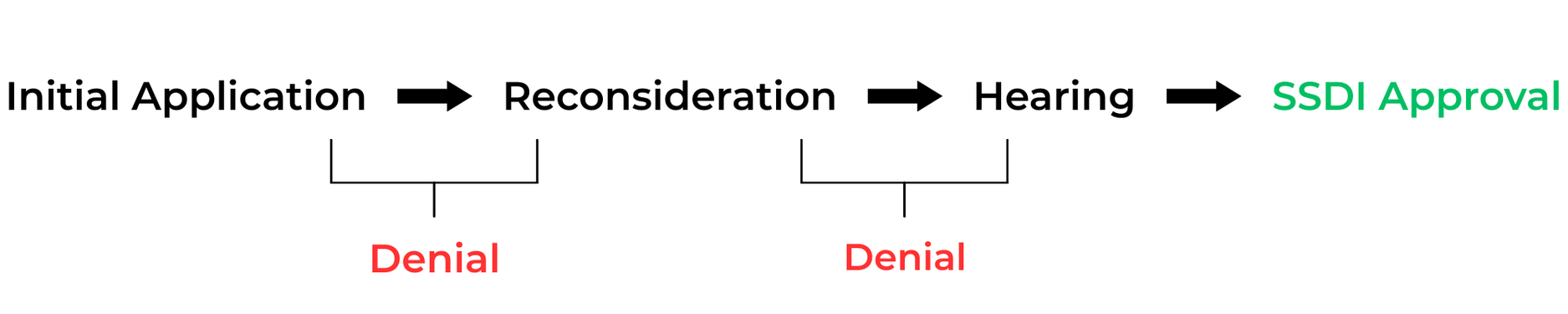
SSDI has three official stages: the Initial Application stage, the Reconsideration stage, and the Hearing stage. Each stage comes with its own waiting period, review standards, and documentation requirements. Understanding how these stages work helps set realistic expectations and reduces confusion during the process.
You are not required to go through every stage. If you are approved at any point, your claim ends and benefits begin. The only reason applicants move forward to later stages is because of a denial.
Most SSDI applicants are denied at the early stages. This is why appeals are common and why many approved claims are not finalized until the hearing level.
A typical SSDI path looks like this:
You can learn more about the disability benefits process here.
Strong preparation and proper case development from the beginning may reduce the risk of denials and shorten how long it takes to reach approval.
Initial SSDI Application Wait Times in 2026
After you submit your SSDI application, the SSA first reviews your work history to confirm that you have enough work credits to qualify.
If you do not meet the work credit requirement, the claim will be denied regardless of medical condition.
If work credits are sufficient, the claim is sent to Disability Determination Services (DDS). DDS reviewers, including medical consultants, evaluate medical records, treatment notes, test results, and physician statements to determine whether your condition meets Social Security’s definition of disability.
During this stage, SSA may contact you to request additional documentation, clarification, or confirmation of information in your application. You may also be scheduled for a consultative exam with an SSA-contracted physician.
In 2026, the initial SSDI decision typically takes about 6 to 8 months, though some cases take longer due to backlogs or missing information.
Here’s a look into how SSA reviews your claim:

Why Initial SSDI Claims Are Often Delayed or Denied
More than 67% of SSDI claims are denied at the initial application stage.
This high denial rate makes appeals a normal part of the process rather than an exception. Some claims are approved quickly, but these cases are usually supported by clear, consistent, and well-documented medical evidence. Many delays and denials happen because key information is missing or unclear.
Here are some common reasons for delays or denials:
- Lack of updated medical evidence
Many claims fail because medical records are outdated or incomplete. SSA reviewers must be able to see how your condition progressed and when it became severe enough to prevent work.
- Not attending consultative exams
SSA may schedule a medical exam with one of its contracted doctors. Missing this appointment often leads to denial because SSA cannot complete its evaluation without it. To learn more about how to prepare for an SSDI consultative exam, click here.
- Incomplete work history
SSDI eligibility depends on work credits. If employment history is incomplete or inconsistent, SSA may deny the claim.
- SSA backlogs
High application volume and staffing shortages mean many claims sit in processing queues for extended periods, delaying decisions even when documentation is strong.
SSDI Reconsideration Wait Times in 2026
If your initial claim is denied, the next step is filing a reconsideration appeal. This must be done within the deadline listed in your denial letter.
Reconsideration is a second review of your claim by a different SSA examiner. You can submit additional medical evidence, updated records, and clarification of previous issues.
Despite this second look, reconsideration has one of the highest denial rates in the SSDI process, with roughly 85% of claims denied again.
In 2026, reconsideration wait times typically range from 3 to 6 months, but some cases extend to 8 or even 10 months depending on workload and complexity.
Why Reconsideration Appeals Rarely Succeed Without Help
The standards used at reconsideration are the same as those applied during the initial application. While the reviewer is different, the rules are not more flexible.
Many claims are denied again because the core reasons for the initial denial were never properly addressed. Applicants also have limited opportunity to explain how their condition affects daily functioning and work ability. Without guidance, the same issues that caused the first denial often lead to a second one.
If reconsideration is denied, the next step is requesting a hearing before an administrative law judge.
SSDI Hearing Wait Times in 2026
An SSDI hearing is a formal legal proceeding where you present your case before an administrative law judge. This is the first stage where you can testify and directly explain how your disability prevents you from working.
Hearings have the highest approval rates in the SSDI process. Roughly 59% of applicants are approved at this stage. However, hearings also have the longest wait times.
In 2026, waiting for a hearing can take 8 to 10 months, sometimes longer depending on location.
After the hearing, a written decision may take an additional 1 to 3 months.
Why SSDI Hearings Have Higher Approval Rates
Hearings allow judges to review the complete medical record, ask questions, and evaluate credibility. Vocational experts and medical experts may also testify about job limitations and medical severity.
This stage gives applicants the opportunity to fully explain their limitations, especially when records alone do not tell the full story. Proper preparation is critical, as testimony and evidence presentation can strongly influence the outcome.
How Back Pay Works While You’re Waiting
If your SSDI claim is approved, you may receive back pay for the months you were eligible but not yet paid.
Back pay is generally limited to 12 months before your application date, with a mandatory five-month waiting period after disability onset. Although the process can take years, approval usually includes compensation for the waiting period.
Long delays do not mean lost benefits, as long as eligibility requirements are met.
Factors That Can Speed Up or Slow Down SSDI Wait Times
SSDI processing times vary significantly from case to case. Every case is different and there are several factors that can influence the speed you receive the decision.
Some of these factors include:
- Age
Older applicants are sometimes evaluated under more favorable vocational rules, which can speed up decisions.
- Medical Severity
Claims involving severe or clearly documented conditions may move faster. The SSA will usually expedite claims when the applicant has a very severe disability.
- Evidence quality and strength of documentation
Complete medical and work records reduce delays and prevent unnecessary follow-ups. This can prevent delays to get your claim approved as quickly as possible.
- 100% P&T VA rating
Veterans with a 100% Permanent and Total VA rating may receive expedited handling by SSA.
Frequently Asked Questions (FAQs)
1. How long does SSDI take in 2026?
SSDI can take anywhere from 3 months to over 3 years depending on how many stages your claim goes through and how strong the evidence is.
2. Why is SSDI taking so long?
Delays are commonly caused by missing records, SSA backlogs, consultative exams, and multiple appeal stages.
3. Can I work while waiting for SSDI?
Technically, yes. But earnings must stay below the monthly substantial gainful activity limit, which is $1,690 in 2026.
4. Does applying earlier help?
Applying as soon as possible helps protect eligibility and may increase potential back pay.
5. What happens if I miss a deadline?
Missing an appeal deadline can cause your claim to be dismissed and force you to start over.
Get Help With Your SSDI Claim
SSDI can take a long time, and getting denied can make the process take even longer. Building a strong case early can reduce delays and improve approval chances.
Victory Disability has helped Veterans across the country navigate SSDI claims, appeals, and hearings by ensuring cases are properly prepared and supported with the right evidence.
Ready to start your SSDI claim? Find out if you qualify by filling out our free online evaluation here.